
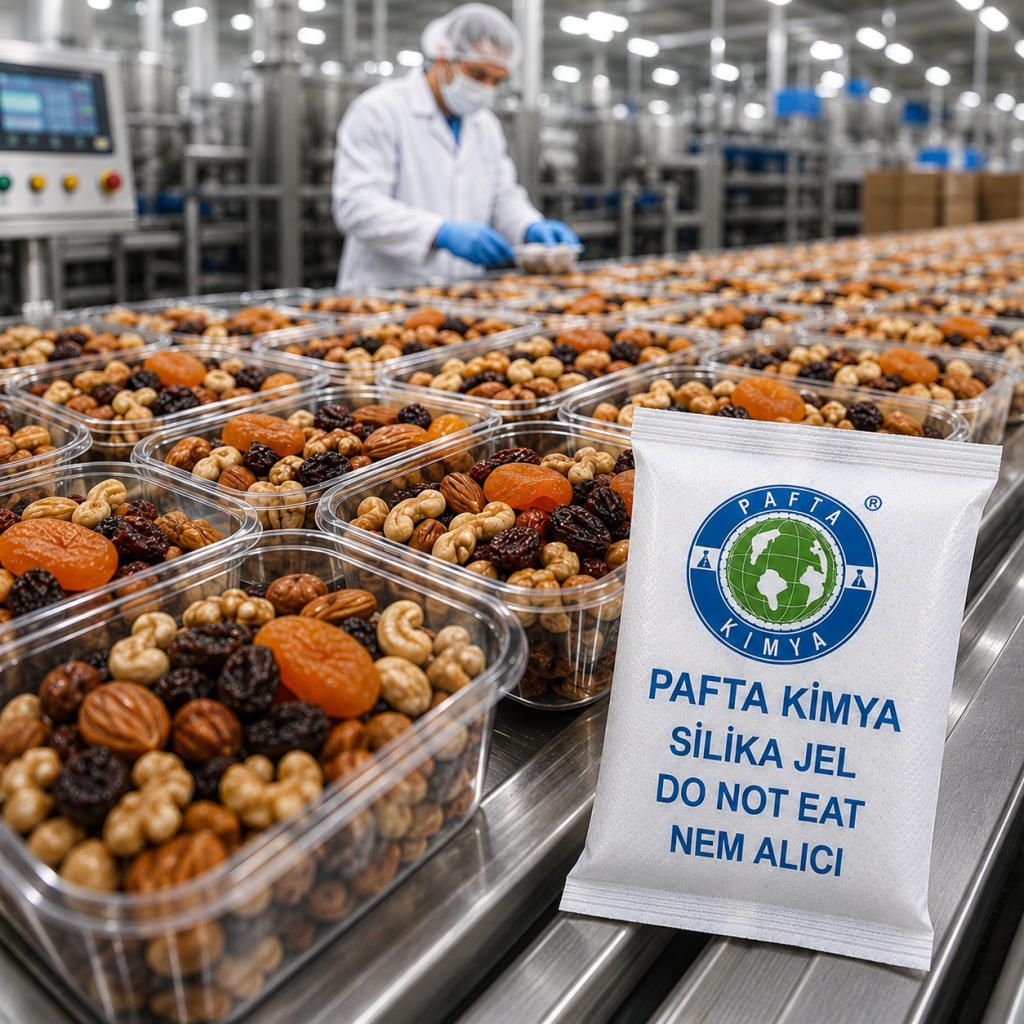
In the food industry, quality, hygiene, and product safety must be maintained not only during production but also throughout storage, packaging, logistics, and shelf life. Moisture is one of the most important environmental factors affecting these processes. Uncontrolled moisture can damage the physical structure of products, shorten shelf life, accelerate microbiological growth, and lead to economic losses. Especially during export processes, temperature fluctuations and sudden changes in humidity can cause condensation inside packaging and seriously affect product quality.
At Pafta Kimya, our high-performance Silica Gel, Molecular Sieve, Activated Alumina, and Container Desiccant solutions help protect food products safely throughout the entire process, from production to the end user.
When the humidity level in the air increases, many dry and semi-dry food products begin to absorb water vapor from their surroundings. This can cause undesirable changes in the structure of the product. Common examples include loss of crispness in dried fruits, clumping of spices, hardening of milk powder, and mold growth on dried fruits. In addition, high humidity can create an environment suitable for mold and microorganism growth, directly affecting the shelf life and consumer satisfaction of food products.
Silica Gel, Molecular Sieve, Activated Alumina, and Container Desiccants provide effective moisture control solutions for different requirements throughout food production, storage, and export processes.
Using the same desiccant for every food product is not always the right choice. The product’s moisture sensitivity, packaging volume, storage duration, transportation method, and climate conditions should be evaluated together.
Pafta Kimya provides reliable moisture control solutions for the food industry through high-quality adsorbent products, technical consultancy, various packaging options, fast supply capabilities, and a customer-focused service approach.
Proper moisture control is essential for maintaining the quality of food products, extending shelf life, and minimizing moisture-related risks during export processes. With its expert team and high-performance products, Pafta Kimya is ready to provide the most suitable solution for your business.
| Product Group | Recommended Solution |
|---|---|
| Dried Fruits | Silica Gel |
| Spices | Silica Gel |
| Coffee | Silica Gel |
| Tea | Silica Gel |
| Dried Vegetables | Silica Gel |
| Vitamins | Molecular Sieve |
| Protein Powder | Molecular Sieve |
| Milk Powder | Molecular Sieve |
| Export Container | Container Desiccant |
| Industrial Drying Processes | Activated Alumina |