
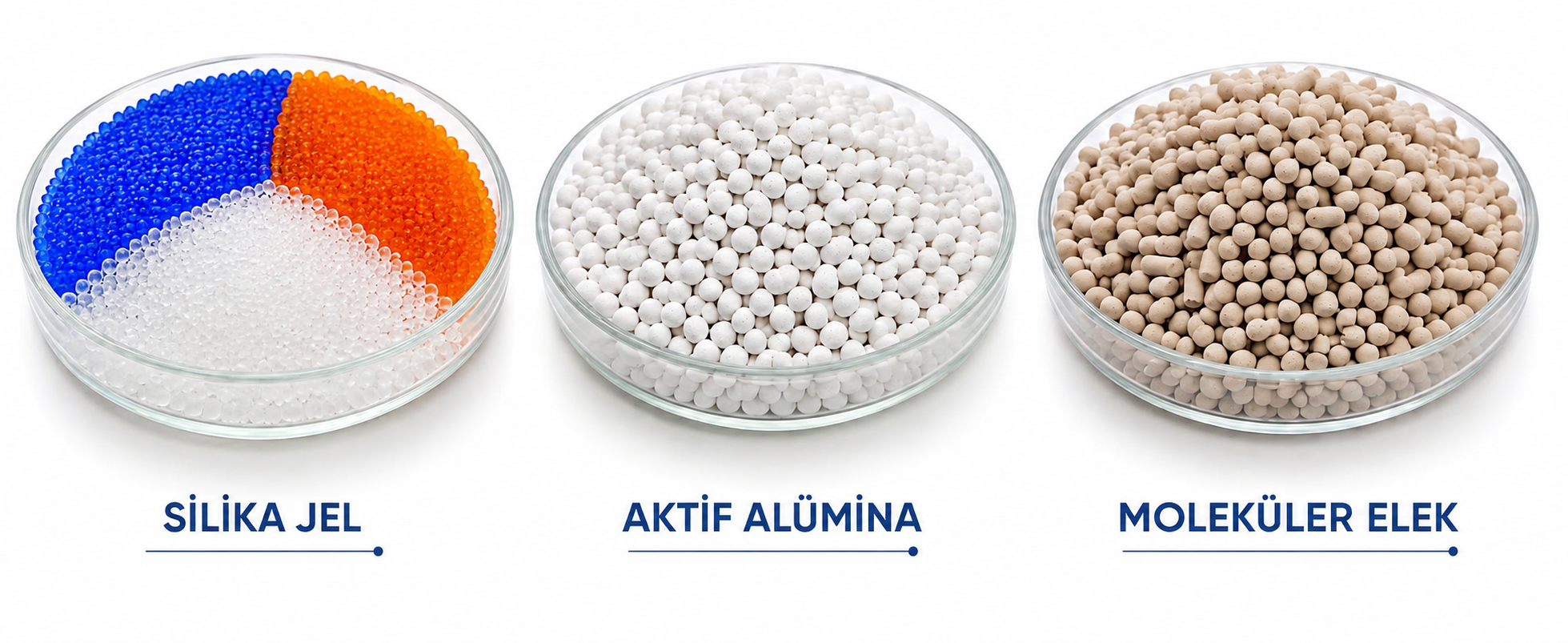
Silica gel is a material known for its moisture-absorbing properties and has a wide range of applications. Silica gel is obtained from silicate minerals and is a substance with a microporous structure, available in the form of white, colorless, or slightly transparent beads. Due to its ability to rapidly absorb water vapor, it is widely used to protect products from the harmful effects of moisture.
1. Packaging and Storage:
Silica gel is commonly used in the packaging of many products that may be affected by moisture, including electronic devices, leather goods, footwear, food products, and pharmaceuticals. It helps protect these products from moisture and contributes to longer shelf life.
2. Electronic Products:
Silica gel packets are placed inside the packaging of electronic devices such as phones, computers, and cameras to protect them from the damaging effects of moisture. This helps prevent moisture buildup inside the products.
3. Footwear and Leather Products:
Silica gel is used during the production and sales stages of leather goods and footwear to prevent moisture-related damage. It also helps prevent odors and deterioration caused by moisture.
4. Food and Pharmaceutical Industries:
Silica gel is used in food packaging, particularly for dried foods, to help keep products fresh for longer. In pharmaceuticals, silica gel is used to protect substances that may lose their effectiveness due to moisture.
5. Personal Care Products:
Silica gel can also be used inside the packaging of personal care products such as perfumes and cosmetics. It helps prevent these products from deteriorating due to moisture.
Silica gel is generally considered a non-toxic and environmentally friendly material; however, it should not be consumed directly. The statement “Do Not Eat” is commonly found on silica gel packets.
At Pafta Mühendislik, we have high-quality silica gel products available in stock. With our wide range of silica gel solutions, you can protect your products from moisture. Whether you need our regularly stocked products or have specific requirements, we are here to provide you with the best service and supply solutions.
Molecular sieve is a synthetic hydrated aluminum silicate (zeolite) or naturally occurring zeolite with molecular-sieving properties and a very high surface area. Molecular sieve offers high adsorption capacity, strong selectivity, and high temperature resistance. It is primarily used in the organic chemical and petrochemical industries. It is also an excellent adsorbent for gas dehydration and removes impurities from the air.
These products can be separated according to their molecular dimensions. This capacity depends on the material and generally ranges from approximately 3 to 10 angstroms in pore diameter, depending on the type. Molecular sieves have a large internal surface area due to their small pores. As a result, molecules larger than the pore openings cannot enter the material, while sufficiently small molecules can penetrate. In general, polar molecules are adsorbed onto the inner surfaces of the pores and retained, while non-polar molecules are not captured.
Molecular sieves are used in various industries and applications due to their ability to selectively adsorb gases and liquids according to molecular size. Some common applications include:
Gas Purification: Molecular sieves are used to purify gases by removing impurities such as water vapor and hydrocarbons.
Liquid Drying: Molecular sieves are used to dry liquids such as solvents and fuels by adsorbing water vapor and other impurities.
Gas Separation: Molecular sieves are used to separate gases according to molecular size, allowing different gases within a mixture to be separated.
Petroleum Refining: Molecular sieves are used in the petroleum industry to remove impurities from petroleum products and improve their quality.
Chemical Production: Molecular sieves are used as catalysts in the production of chemicals such as plastics and resins.
Food and Beverage Production: Molecular sieves are used to remove impurities and improve the quality of food and beverages.
Medical Applications: Molecular sieves are used in the production of medical products such as dialysis filters.
Different molecular sieve types are available depending on the size of the molecules to be separated:
These four main types differ according to their pore sizes.
Activated alumina is a type of aluminum oxide consisting of highly porous spherical particles with a microscopic “tunneled” structure and an exceptionally high surface area. It is mainly used for the adsorption of gases present in liquids. Adsorption is the process by which a substance adheres to the surface of another substance. Activated alumina performs this process very effectively and is therefore widely used. It also has a high affinity for water vapor, making it particularly suitable for drying gases. Gases such as propane should be dried before use to prevent equipment corrosion that may lead to hazardous leaks.
Activated alumina is used in a variety of industrial applications. For example, it is used in air purifiers to improve air quality. It is also used to remove chemicals and odor-causing substances. Activated alumina prepared with a specific formulation can additionally help prevent the growth of microorganisms in liquids and thereby extend the shelf life of these liquids.
Activated alumina is used in various industrial and commercial applications due to its high surface area and ability to adsorb gases and other substances. Some common applications include:
Air Purification: Activated alumina is used in air purifiers to remove foreign substances and contaminants from the air.
Water Purification: Activated alumina is used to remove contaminants and unwanted substances such as arsenic and fluoride from water.
Chemical Production: Activated alumina is used as a catalyst in the production of chemicals such as plastics, resins, and pharmaceuticals.
Petroleum Refining: Activated alumina is used to remove impurities from petroleum products.
Gas Drying: Activated alumina is used to dry gases such as natural gas by removing water vapor and other impurities.
Food and Beverage Production: Activated alumina is used to remove impurities and improve the quality of food and beverages.
Industrial Gases: Activated alumina is used to purify industrial gases such as hydrogen and oxygen.
Medical Applications: Activated alumina is used in the production of medical products such as dialysis filters.
Different types of activated alumina are available depending on the size of the molecules involved and the intended separation process: